

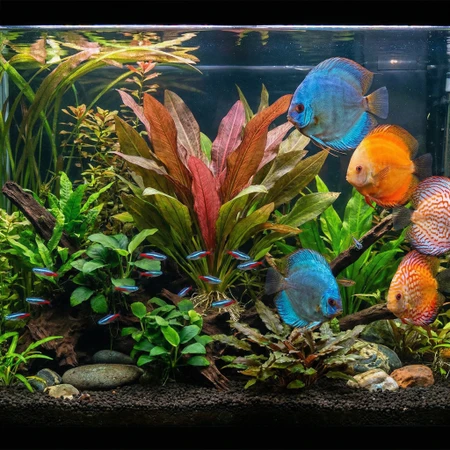
Sword Plants in the Aquarium (Part 2): Varieties, Benefits, and the “Long Game” of a Thriving Sword
Posted by Artur M. Wlazlo on 7 Feb 2026
This is Part 2 of a two-part guide to Sword Plants (Echinodorus) for planted aquariums. If you haven’t read it yet, Part 1 lays the groundwork—what swords are, where they come from, how their rosette growth changes an aquascape, and the core care philosophy that makes them thrive (planting depth, root-zone nutrition, light, stability, CO₂ as an optional boost, and simple maintenance).
If Part 1 is the “why swords work,” then Part 2 is where swords become personal—because once you understand the plant’s rhythm, you get to choose the kind of sword story you want to tell in your tank. Do you want that classic green centerpiece that makes a community aquarium feel like a real habitat? Do you want a red or speckled showpiece that reads like living artwork? Or do you want a shorter, grassier sword effect that softens the foreground and gives shrimp a place to graze? This is the part where those choices come to life.
And if you’re shopping while you plan, ModernAquarium.com makes it easy to go from idea to execution because the sword selection is broad enough to build an entire layout around Echinodorus—from big anchors to smaller accents.
The Sword “Family Tree” in the Hobby: not one plant, but a whole design language
Aquarists say “sword plant” as if it’s a single thing, but in practice, it’s more like a style of growth form. The common thread is the rosette and the crown, yet the expression varies wildly: leaf width, leaf length, waviness, marbling, speckling, and color that shifts from green to bronze to deep red depending on conditions.
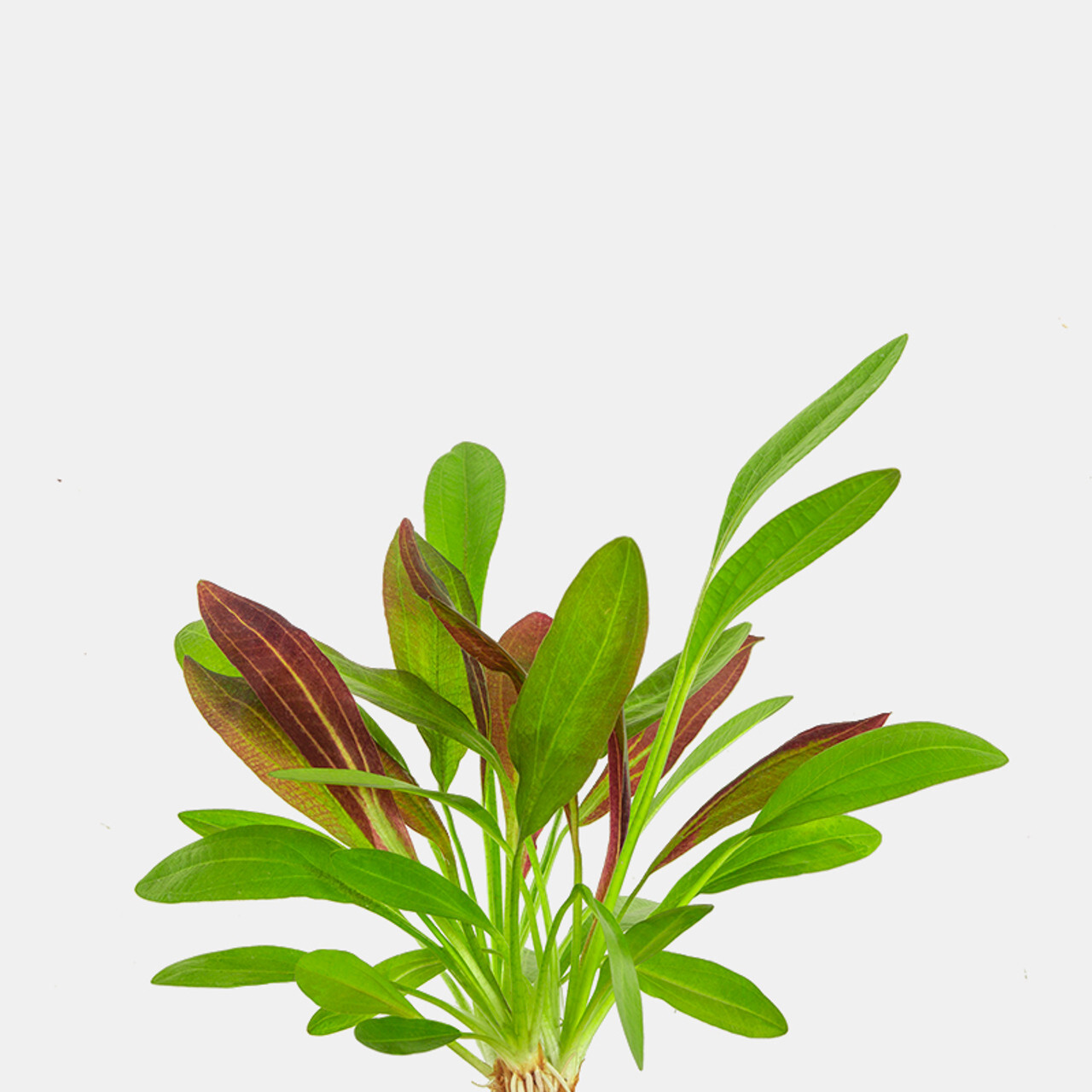
That’s why swords are so useful in aquascaping. You can keep the same overall “shape” in the layout—rosettes rising from the substrate—while changing the mood just by swapping varieties. A tank with a classic Amazon Sword feels like a riverbank. A tank with an Ozelot or a Red Rubin feels like a planted gallery piece. A tank with chain swords and micro swords can feel like a meadow under open water.
A practical guide to ModernAquarium.com sword options (and how they tend to behave)
Rather than rattling off a catalog, it helps to think in roles—because swords are easiest to place when you choose what job you want them to do.
The anchor swords (classic centerpiece/background “mass”)
Amazon Sword is the archetype here: it grows with authority, builds presence over time, and gives fish a dependable home base. This is the plant you use when you want the tank to look established without needing a dozen different species to create impact. If your goal is “lush and natural,” the classic green anchor swords are the most direct route.
The statement swords (color, pattern, and contrast)
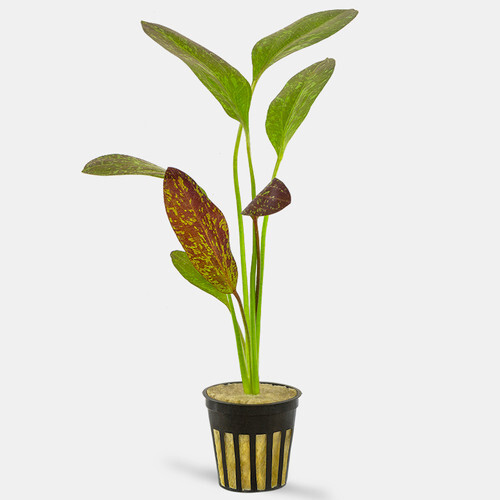
Ozelot varieties (green or red) and other red-leaning swords like Red Rubin, Red Flame, Rose, and the melon-type swords are for aquarists who want their plant to be the focal point—not just the supporting cast. These swords tend to look their best when the basics from Part 1 are truly in place: consistent light, a well-fed root zone, and stable conditions. They’re not necessarily “hard,” but they are honest: the more you invest in fundamentals, the more dramatic the payoff in color and form.
The texture swords (ruffles, waves, and “movement”)
If you’ve ever looked at a planted tank and thought, this feels too stiff, ruffled or wavy swords are a solution. They add motion even when the water is still, just because the leaf edges and posture create visual flow. In a layout with straight stems or rigid hardscape lines, a ruffled sword can make the scene feel more organic.
The smaller swords (foreground and midground “carpet-adjacent” energy)
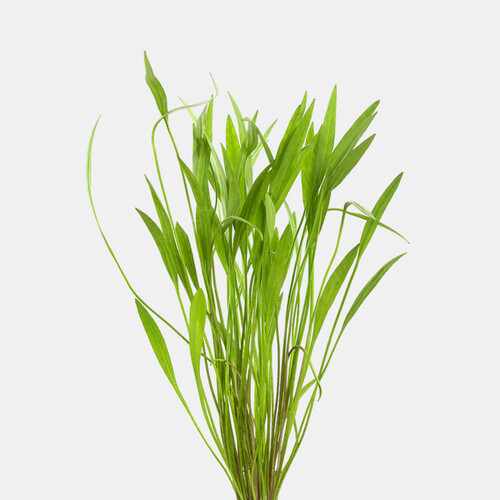
Chain swords (broad leaf or narrow leaf) and micro sword options are a different kind of tool. They’re not trying to be a single centerpiece; they’re trying to create a field—an area that looks planted and intentional, especially in the front half of the aquarium. They can be especially satisfying in shrimp tanks or nano community tanks because they build that “scale” feeling: the tank looks bigger when the foreground has texture and depth.
The real advantage of having all these options on one site is that you can design intentionally. You can pick one anchor sword and then choose a contrasting sword—speckled next to solid, narrow next to broad, green next to red—so the aquascape feels cohesive without looking repetitive.
What swords do for fish, shrimp, and the ecosystem of the tank
A sword plant is not just decoration. It’s structure. And structure changes how animals behave.
Fish use sword leaves like rooms in a house. They hover under the canopy when they want security. They patrol around the base when they want territory. They rest against broad leaves the way you’d rest a hand on a railing—subtle, but constant. In community tanks, that reduces stress in a way that’s hard to quantify until you see it: fish stop acting “exposed” and start acting “settled.”
Shrimp and snails treat swords like grazing stations. Biofilm develops on leaf surfaces and along the base where fine debris naturally collects. That isn’t “dirt” in the bad sense—it’s the start of a micro-food web. The sword’s footprint becomes a living patch of foraging habitat, which is exactly what you want if you’re aiming for a tank that feels like a small ecosystem rather than a glass box.
And then there’s the plant’s role in water quality and stability. Any healthy plant is part of the nutrient economy of the tank. Swords, in particular, tend to reward stable setups because they steadily draw nutrients over time and convert them into biomass—new leaves, thicker growth, a more resilient root network. When the tank is balanced, the sword becomes one of those plants that quietly helps keep things from swinging too wildly.
The sword problems people run into (and the simple fixes that usually work)
Most sword issues fall into a handful of patterns. The good news is that they’re rarely mysterious once you know what to look for.
A sword that “melts” shortly after planting is often just transitioning—especially if it was grown emersed before it arrived. The plant sheds leaves that aren’t suited to permanent submersion and replaces them with true submerged growth. In that phase, patience matters as much as anything else. Keep conditions steady, keep the crown above the substrate, and let the plant re-build.
Yellowing older leaves, pinholes, or weak new growth typically trace back to nutrition—most often the root zone. Swords can’t look like powerhouse plants if they’re living on fumes under the substrate. Feed the base consistently and remove failing older leaves so the plant can re-focus on new growth.

Algae on older leaves is another common complaint, especially in brighter tanks. The fix is rarely “scrub the leaves.” It’s usually a balancing act: remove heavily affected older leaves, keep nutrients consistent (not spiky), and avoid extremes—too much light without enough plant nutrition tends to invite algae to claim the slow-growing outer leaves first.
And if a sword keeps popping out of the substrate, it’s usually about anchoring rather than health. Plant the roots deeply enough to hold, but never bury the crown. Sometimes a small ring of gravel or a gentle brace from nearby hardscape helps the plant stay put while it establishes.
None of this requires constant tinkering. In fact, swords prefer the opposite. They want you to do the basics well—and then leave them alone long enough to become themselves.
How swords shape an aquascape over time: the “long game” payoff
A sword tank doesn’t peak overnight. It matures.
Early on, your sword is mostly promise: a few leaves, some settling, maybe a little melt, maybe slow growth while roots take hold. Then, almost without warning, the plant turns a corner. New leaves start emerging faster. The rosette thickens. The plant looks less like something you placed and more like something that belongs.
That’s the moment swords are famous for—the moment the aquarium starts looking like a real place. Fish move differently. The layout reads more naturally. Your maintenance becomes simpler because the plants are doing more of the work of stabilization. And your aquascape gains that rare quality that photos capture but beginners struggle to create: maturity.
If you’re building a planted aquarium that you want to enjoy for months and years—not just weeks—swords are one of the best “investments” you can plant.