

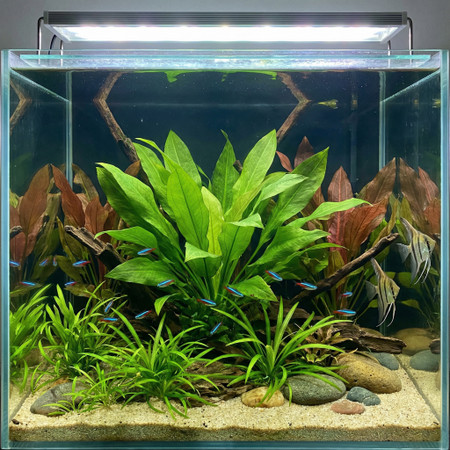
Sword Plants in the Aquarium (Part I): the “Anchor” Plant That Makes a Tank Feel Alive
Posted by Artur M. Wlazlo on 7 Feb 2026
There’s a moment most aquarists recognize: the tank is cycled, the hardscape is in, the fish are settled—and yet the aquascape still feels a little unfinished. Then you plant a sword. You press those roots into the substrate, keep the crown just above the gravel line, and suddenly the aquarium gains a center of gravity. A sword plant doesn’t just fill space; it creates a sense of place—like the tank finally has a shoreline, a thicket, a home base where fish can hover, shrimp can forage, and the whole scene looks like it could have existed long before you ever touched a scaper’s tweezers.
That “anchoring” effect is exactly why sword plants remain some of the most beloved freshwater plants in the hobby—by beginners who want something forgiving, and by experienced aquascapers who want a bold rosette to frame the layout.
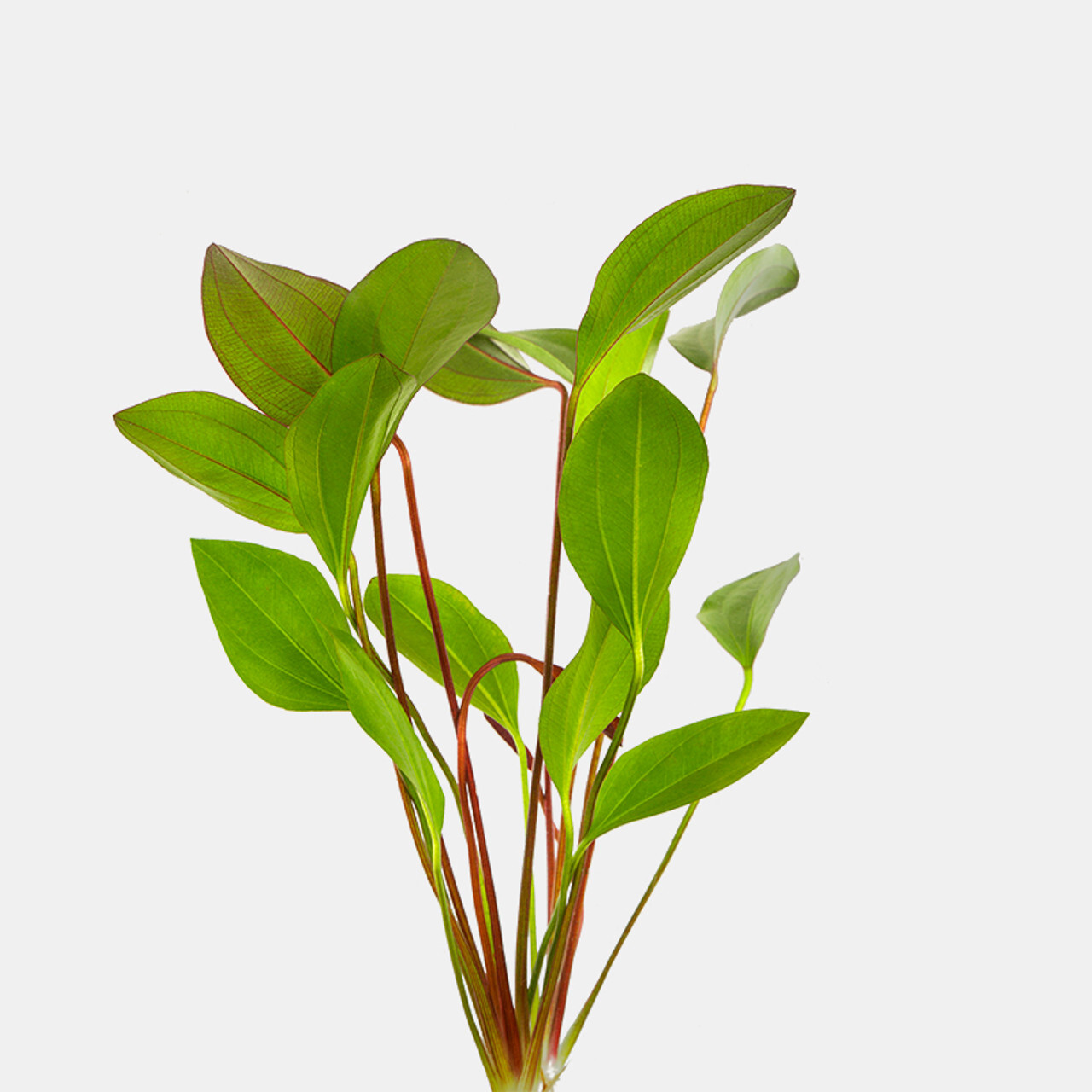
ModernAquarium.com leans into that strength with a deep bench of sword options—from classic green giants to red-speckled showpieces and smaller, grass-like “micro” swords for foreground accents. (More on specific varieties in a bit.)
What “Sword Plants” Really Are (and where they come from)
In everyday aquarium language, “sword plant” usually means Echinodorus—rosette-forming plants with lance-shaped leaves that rise from a central crown. Swords are rosette-type plants they’re capable of growing partially emersed or fully submerged—one reason they adapt so well to aquarium life.
In nature, many Echinodorus live in the gentle margins of waterways—marshy edges, slow streams, floodplains—places that change with seasons and water levels. Botanically, the genus is a New World group (the Americas), and many of the most familiar aquarium “Amazon swords” trace back to Central and South American regions.
That amphibious background matters in the aquarium because it explains a few “sword behaviors” that surprise people at first—like how they can throw runners, change leaf shape as they settle, or occasionally push growth upward when conditions are strong. In other words: swords aren’t fragile underwater ornaments; they’re wetland survivors that learned to roll with changing conditions.
The Sword Plant Look: why a rosette changes the whole aquascape
A sword is not a stem plant that you trim into a hedge. It’s a crown plant: leaves emerge from a central point and radiate outward, building a layered rosette. In a well-grown specimen, older outer leaves form a broad “skirt,” while fresh inner leaves rise like new blades—clean, upright, and often more intensely colored.
That structure makes swords powerful design tools:
- In smaller tanks, one sword can be the focal point that makes the layout feel intentional instead of scattered.
- In larger aquariums, swords become “groves”—two or three rosettes planted as a cluster can create a natural shoreline effect.
- For fish behavior, the broad leaves create instant comfort: resting platforms, territories, and cover without turning the tank into a dark cave.
And the best part? You don’t need a high-tech system to get that presence. You need the basics done right—especially at the roots.
Care, the Sword Way: roots first, then everything else
If swords have a personality, it’s this: they don’t like shortcuts at the root zone. These are crown-and-root plants that want to eat from the substrate, settle in, and then reward you with that big, confident rosette growth that makes a tank look established. When a sword struggles, the story is usually simple—either the crown was planted too deep, the roots aren’t being fed, or the plant hasn’t had enough time (and consistency) to convert into its fully submerged rhythm.
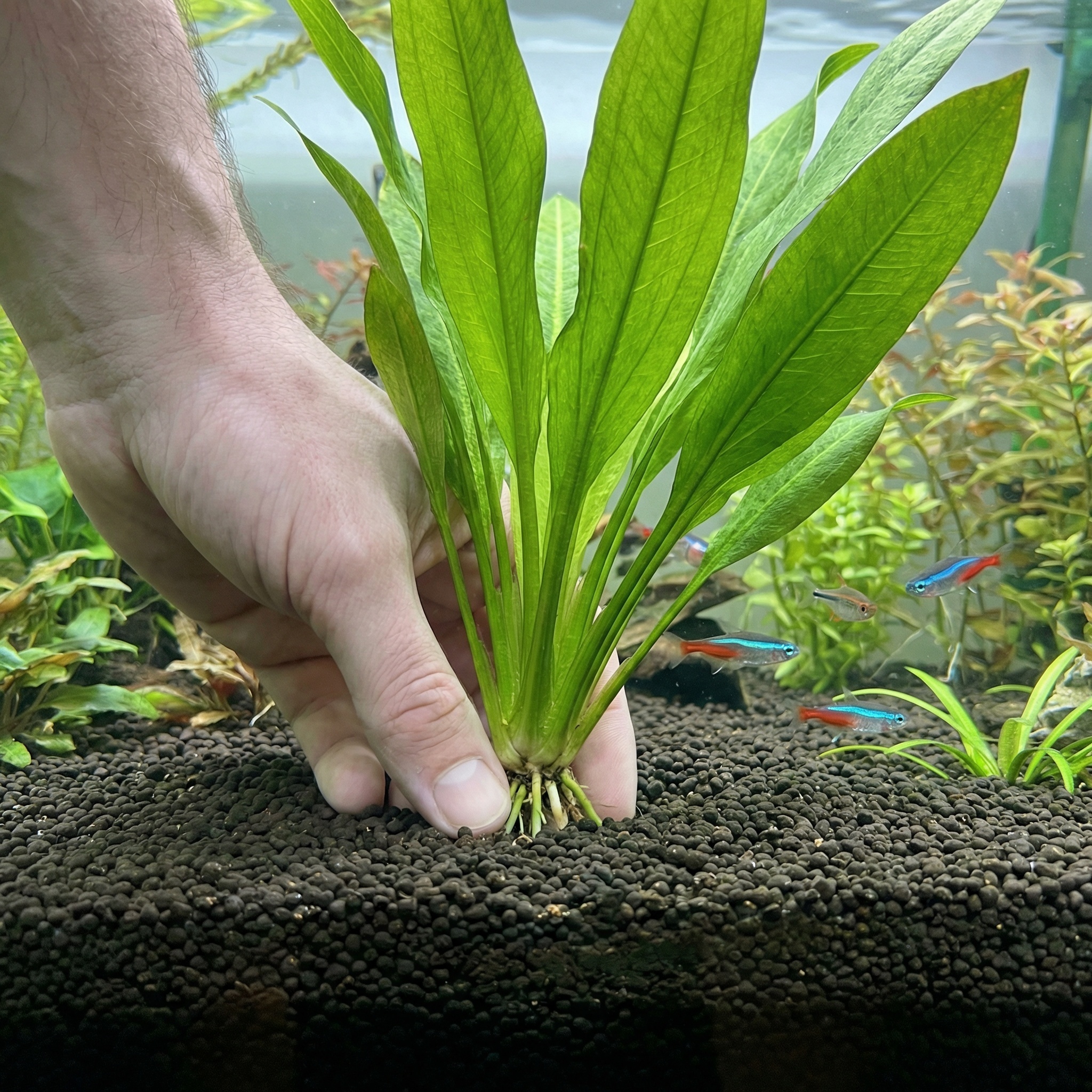
Start with planting, because that one step sets the tone for everything that follows. A sword’s “crown” (where the leaves meet the root base) should sit above the substrate line. You want the roots anchored, but you never want the crown buried—swords that are planted too deep often stagnate, melt, or rot right where they should be strongest. Once the crown is positioned correctly, press the roots in firmly and resist the urge to keep moving the plant around. Swords do best when they can claim their spot and build a stable root network.
From there, think like a farmer: swords are heavy root feeders. They look their best when the substrate is nutrient-rich, and even in inert gravel they typically appreciate root-zone supplementation. In real-life tanks, that translates to steady, long-term nutrition at the base—enough to support new leaves that are larger, sturdier, and more saturated in color. Liquid fertilizers can help, but for most swords the “main meal” is still down below.
Light is the next lever, but it works more like a dimmer than an on/off switch. Most swords are comfortable in moderate light—strong enough to maintain healthy new growth without demanding a high-tech setup. Under lower light they may hang on and grow slowly, but they often look thinner and less dramatic. As light improves (and the roots are well-fed), swords tend to broaden out, push more frequent leaves, and show off the traits people buy them for—especially in red, speckled, or patterned varieties.
Temperature and water chemistry matter less as strict numbers and more as a stable neighborhood. Swords generally do well in typical tropical conditions—roughly the 70–80°F range and mildly acidic to neutral water. Chasing perfection isn’t the goal; consistency is. Sudden swings, big changes, or repeated replanting can keep a sword stuck in “recovery mode” rather than “growth mode.”
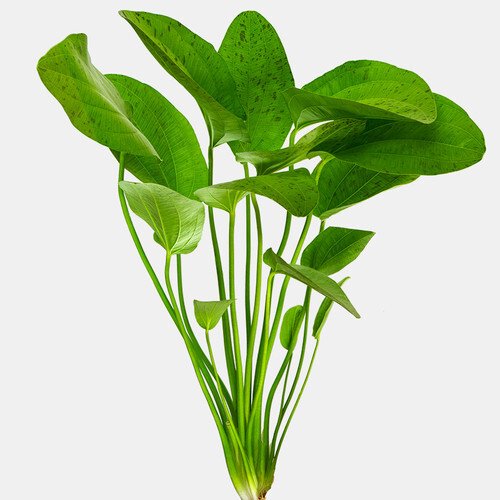
CO₂ is best viewed as an accelerator, not a requirement. A sword can become a centerpiece without injected CO₂ if the fundamentals are right—good planting, a fed substrate, and steady light. With CO₂, growth can become faster and more robust, but it won’t fix a buried crown or an empty root zone. If you want the plant to look “premium,” feed the roots first; then CO₂ can take what’s already working and push it further.
Finally, maintenance with swords is less about frequent trimming and more about gentle housekeeping. Let the plant keep its newest inner leaves—those are the engine of future growth. As older outer leaves yellow, develop pinholes, or collect algae, remove them cleanly at the base. That small habit keeps the rosette tidy, improves circulation around the plant, and helps the sword redirect energy into fresh, healthy growth.
When these pieces click together, sword care stops feeling like a checklist and starts feeling like a simple rhythm: plant it correctly, feed the base, keep conditions steady, and let time do its job. That’s when swords go from “a plant that survives” to “the plant that defines the tank.”
As you move from understanding swords to actually choosing and using them, the next questions tend to be more practical: which sword varieties create the look you want, which ones work best as anchors versus accents, and how swords support fish, shrimp, and the overall “ecosystem feel” of a planted tank over time. Part 2 picks up right there—walking through the different types of swords you’ll see at ModernAquarium.com (from classic Amazon-style anchors to speckled and red showpieces and smaller, grass-like options), how to use them intentionally in the aquascape, and the most common sword issues aquarists run into with simple, real-world fixes—so you can go from theory to a sword-planted tank that truly settles in and matures.