

Posted by Artur Wlazlo on 26 Aug 2026
How to Choose Lighting for a Planted Aquarium
Key Takeaways
- LEDs are the best lights for a planted aquarium.
- The best planted aquarium light setup is based on PAR (Photosynthetically Active Radiation), not the outdated WPG (Watts Per Gallon) rule used for fluorescents.
- Make sure the lights produce the light spectrum and intensity to match your tank’s plant species. Look for controls that let you make adjustments.
- The light’s PAR must match the size and depth of your specific tank.
- Don’t overlight your plants or keep the lights on for longer than necessary.
- Clean the lights at least weekly to remove debris that blocks light from reaching your plants.
Aquarium plants need light. They use planted aquarium lighting to photosynthesize, creating their own energy to grow and propagate. Without sufficient light, plants cannot photosynthesize and will wilt.
Choosing the best lighting for aquarium plants is probably the most important decision a hobbyist will make, as it determines how successful he or she will be at keeping them.
Join us for a deep dive into the most important factors to consider when purchasing aquarium lights.
1. Light Types
The vast majority of modern planted aquariums use LED fixtures. LEDs are ideal because they run cool, are extremely energy-efficient, and will usually last for many years without losing intensity. We highly recommend choosing LEDs instead of outdated fluorescents.
2. PAR vs. WPG
When choosing planted aquarium lighting, it’s important to choose your setup based on PAR (Photosynthetically Active Radiation), not the outdated WPG (Watts Per Gallon) rule used for fluorescents. Remember: LEDs are the best planted aquarium light.
When selecting the best light for a planted aquarium, PAR is far more relevant and accurate because it measures the intensity of usable light reaching plants at a specific depth, rather than the amount of electricity consumed per gallon.
3. Light Spectrum
Explaining what light is and how it works can quickly turn into a confusing disorder of highly technical terms. However, a brief explanation will be helpful, as it will later clarify why planted aquarium lighting is superior to other lighting options.
- The light we see is made up of different wavelengths, each with a specific color. This phenomenon becomes visible to us when we spot a rainbow in the sky.
- When sunlight passes through water droplets, it is broken into separate wavelengths, which we see as the colors of the rainbow. These wavelengths are measured in nanometers.
- For example, blue light is in the 400-nanometer range, green light is in the 500-nanometer range, and red light is in the 650-nanometer range.
- Plants use only some of the light that they receive. Thus, providing the light that plants will use most efficiently should be our focus when choosing planted aquarium lighting.
- Plants evolved to most efficiently absorb red light in the 650 to 680 nanometer range.
- Plants will also absorb blue light quite well, but strong blue light will also promote algae growth. Accordingly, in the aquarium, we should provide light in the red area of the spectrum.
The best planted aquarium light will be designed to produce the light that benefits aquarium plants the most. Many of the best lights for a planted aquarium also allow you to customize the color output. Choose lights that provide the color spectrum your aquarium plants need to thrive.
4. Light Intensity
Light intensity is measured in lumens. By way of comparison, natural bright sunlight produces about 70,000 lux (lux is a measure of lumens per square meter). However, depending on the species, planted aquarium lighting should be anywhere between 300 to 6,000 lux.
A lot of the light is lost before it reaches plants. Some light is lost when it is reflected off the water's surface. Some of the loss occurs when the light passes through water or a glass cover, or when particles in the water absorb it.
Debris in aquarium water can reduce light intensity quite considerably. The deeper the aquarium, the greater the expected loss of light. Keeping a glass cover clean and the water clear by removing floating particles with good filtration reduces light loss.
Pro Tip: Look for Intensity Controls
Many modern planted aquarium lighting systems let you modulate light intensity, allowing you to customize the output and ensure the plants receive the right amount of light.
This is especially important for larger and deeper aquariums, which may require higher intensity to reach the plants on the bottom. Or, if your aquarium has mostly low-light-tolerant plants, these lights will let you dial down the intensity and better meet their needs.
5. Matching Light to Plant Types
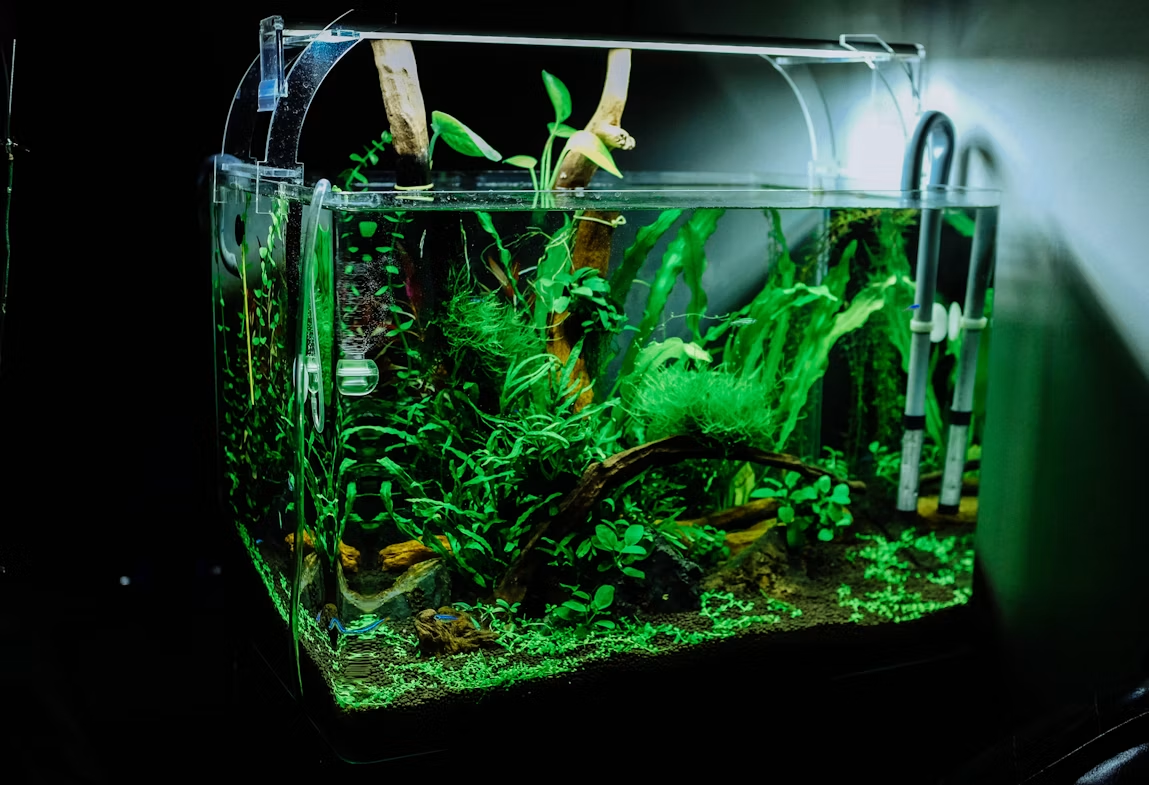
While intensity controls are helpful, it’s still important to match the overall intensity of your setup to the species in your tank. Consider the following when picking out the best lights for a planted aquarium:
- Low-light plants like Anubias, ferns, and mosses require planted aquarium lighting in the 15-30 PAR range.
- Medium-light plants like Bucephalandra, Cryptocorynes, Vallisneria, and Sagittaria require light in the 30 to 50 PAR range.
- High-light plants like mats, lily-like plants, and bunch plants require 50+ PAR lights.
6. Light Duration
In nature, most tropical regions receive between 10 to 12 hours of sunlight. However, the light intensity varies throughout the day with the most intense light occurring during the middle part of the day. Your planted aquarium lighting should perform similarly.
To mimic their original environment, the best lighting for aquarium plants comes with a pre-programmed dawn-to-dusk light cycle.
These gradual, and more natural, increases and decreases in light intensity eliminate the shock of sudden changes from dark to bright light that both plants and fish would otherwise experience, greatly benefiting their health and well-being.
In summary, the best planted aquarium lights are programmed to mimic nature and provide for a gradual increase and decrease in light intensity.
7. Tank Size and Depth
The best light for a planted aquarium must provide enough light to actually reach your plants. Planted aquarium lighting that provides high PAR in a shallow tank may not be adequate in a deep tank.
When shopping for lighting, you must check the manufacturer’s PAR charts specifically for the depth of your tank.
8. Photoperiod and Overlighting
One of the most common mistakes we see beginners make is leaving the lights on too long so they can enjoy viewing their aquariums day and night. Most aquatic plants finish photosynthesizing within 6 to 8 hours. After that, you’re mainly feeding nuisance algae.
9. Regular Cleaning and Maintenance
Over time, it’s common for planted aquarium lighting to become crusted with mineral deposits caused by evaporation. Every week or so, make it a point to unplug and clean your lighting fixture to ensure that the light waves aren’t obstructed by debris.
10. Our Recommendations
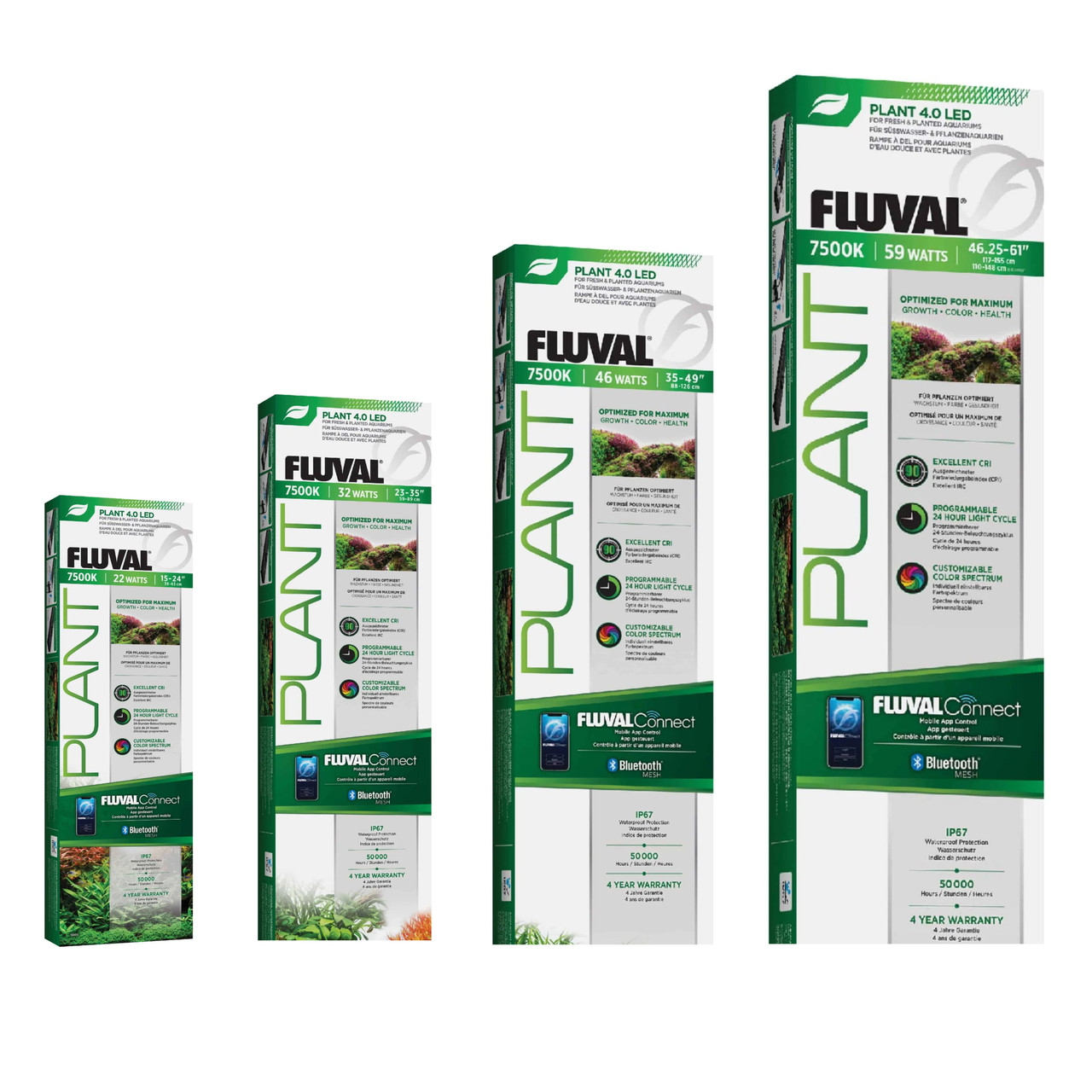
Fortunately, you’re in the right place for your lighting needs. These lights will help your aquarium plants grow well and show them in the best light:
- Two of the most popular lights for a planted aquarium are the Fluval Plant Spectrum 4.0 Bluetooth 24/7 LED Aquarium Light and the Fluval Plant Spectrum 3.0 Bluetooth 24/7 LED Aquarium Light.
- The Finnex Planted+ 24/7 CRV Aquarium LED Light is also a great choice.
Reach Out for Expert Assistance
Need help choosing planted aquarium lighting? Call us at (917) 231-5956 for personalized advice on selecting the best light for your planted aquarium. We carry the industry’s best planted aquarium lights. Shop now.