

How to Properly Feed Live Aquarium Plants in a Home Aquarium
Posted by Artur Wlazlo on 31 Dec 2025
Key Takeaways
- Figuring out the correct nutrients and maintenance routine for your live plants is essential to ensuring they thrive in your aquarium.
- Typically, your plants require a blend of fertilizers, CO2 injections, and specific nutrient tabs to ensure well-rounded care.
- Some of the most common nutrients live plants need, such as micro and macronutrients, include nitrogen, potassium, phosphate, and calcium, available in liquid and tab form.
Aquarium Plant Food Essentials
Some hobbyists may be forgiven for being confused by the large variety of nutrients plants need and the seemingly dizzying variety of commercially available fertilizers. Modern Aquarium is here to attempt to simplify your decision about what aquarium plant food to choose and how to properly dose your live plants. Read on to learn more about how to feed aquarium plants and what nutrients aquarium plants need.
Micro vs. Macro: Nutrient Overview
Live aquarium plants require nutrients to thrive. Plant nutrients are often categorized into two broad categories: macronutrients and micronutrients.
Aquarium plants need macronutrients in larger quantities, including:
- Calcium
- Carbon
- Hydrogen
- Nitrogen
- Magnesium
- Phosphorus
- potassium
On the other hand, micronutrients, also called trace elements, are aquarium plant foods that plants need in small quantities. These include trace elements such as:
- Copper
- Manganese
- Iron
- boron
Aquarium plants need both types of nutrients to grow healthy.
There are different sources of nutrients for aquarium plants. For example, tap water, decaying fish food, fish waste, and substrate are all potential sources of aquarium plant food.
What About Too Much Aquarium Plant Fertilization?
Unfortunately, many commercially available fish foods are particularly high in phosphate and potassium, and uneaten or rotting fish food may produce more nutrients than the plants can take up, leading to possible algae problems and water quality issues.
You can ensure there’s a balance in your aquarium plant food by testing your water regularly and filtering it to remove nutrients, or adding fertilizer for more nutrients.
How Plants Eat
Aquarium plants absorb nutrients both through their leaves and roots. When supplying aquarium plant food, consider the best aquarium plant fertilization to address their eating habits. There are two different types of aquarium plant fertilizers, including liquid fertilizers and root tabs.
Liquid fertilizers are ideal for plants with larger leaves that can absorb nutrients through the water, while root tabs are how you feed aquarium plants with deep-reaching roots that don’t have leaves with as much surface area.
Nutrient-Rich Aquarium Plant Substrates
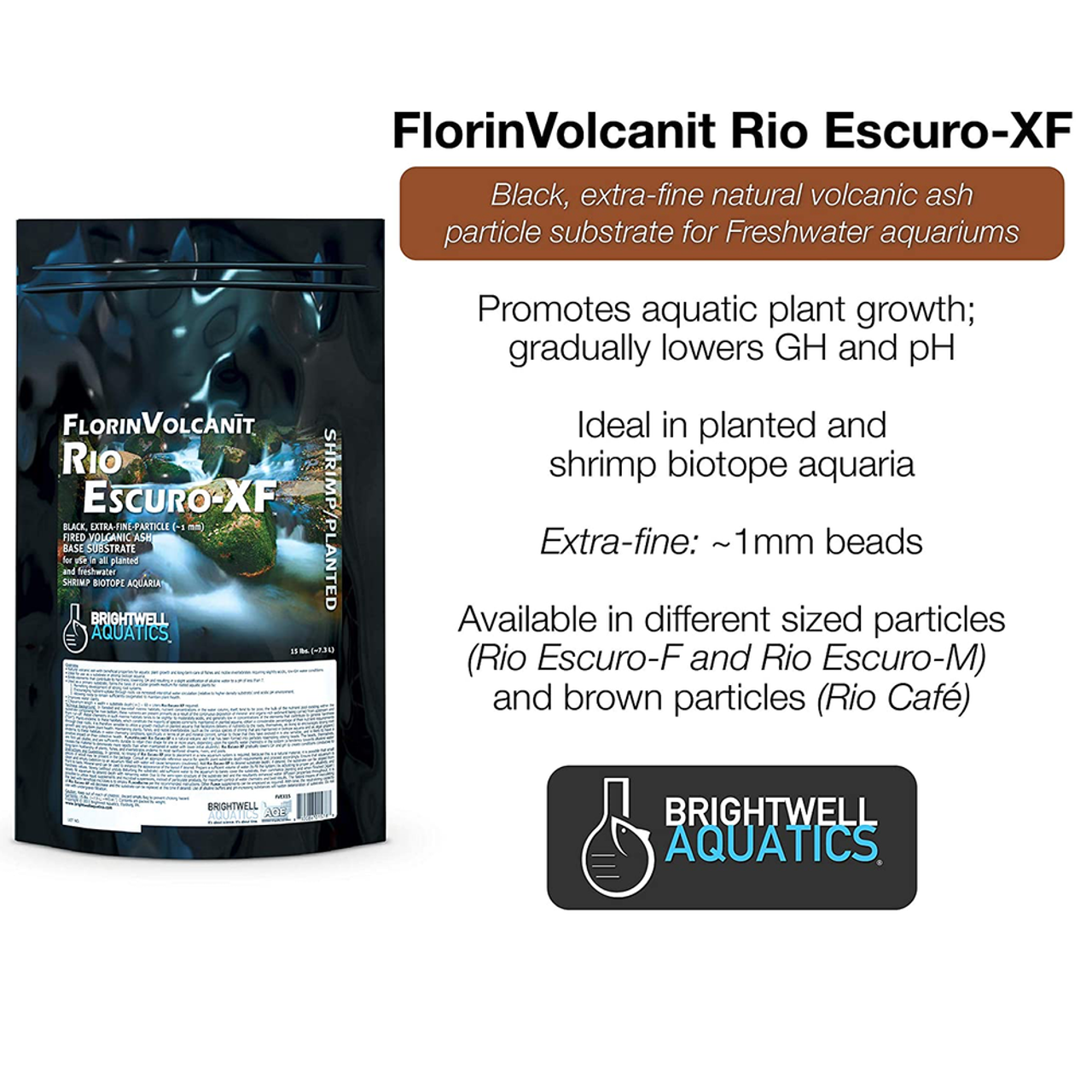
Some nutrient-rich plant substrates already come with the nutrients plants need to thrive. Unlike rotting fish food or fish waste, most of these nutrients are released slowly in small quantities and over an extended period, allowing the plants to consume them without the risk of over-fertilization. Nutrient-rich plant substrates are a great long-term solution for aquarium plant food.
Nutrient-rich substrates alone may not be enough, however, to meet all of your aquarium plants' nutritional needs. What nutrients aquarium plants need include additional aquarium plant fertilization with the help of root tabs and liquids to recharge the substrate and ensure your plants' continued robust growth and excellent health.
Liquid Aquarium Plant Fertilizers
The dizzying variety of liquid fertilizers available for aquarium hobbyists may be understandably confusing. And, unfortunately, not all plant fertilizers are of the same quality. The choice of which one to use matters. The mantra "you get what you pay for" is certainly applicable here, as some "off-the-shelf" liquid fertilizers may not have the proper mix of nutrients.
Well-formulated liquid fertilizers can be very helpful in supplying all sorts of nutrients to aquarium plants in proper quantities, including macro and micronutrients. These aquarium plant foods should contain nitrogen, calcium, phosphate, potassium, magnesium, boron, copper, iron, and zinc.
Plants That Love Liquid Fertilizers
Liquid fertilizers are an especially excellent source of plant food for stem plants, which are generally very good at absorbing nutrients through their leaves from the water column, including:
Floating aquarium plants, like Red Root Floater or Duckweed, as well as epiphytic aquarium plants, like Java Fern or Anubias, do not root into substrate, and will only be able to take up nutrients from the water. You must use liquid aquarium plant fertilization for these plants.
Our recommendation is the Thrive All-In-One Liquid Fertilizer. It’s the best liquid aquarium plant food based on our long-time use and experience with this product. We use it regularly in our home aquariums and those set up in our warehouse. The quality and results we get with this plant fertilizer are undeniable.
Root Tabs Plant Fertilizers
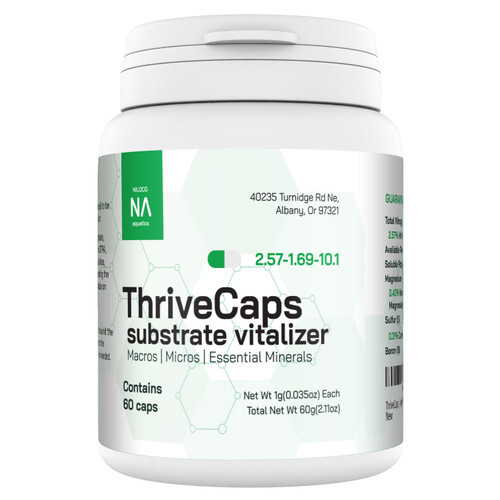
Often overlooked, root tabs are an excellent source of nutrients for aquarium plants. They are available in tab or soluble capsule form, containing nutrients and additives. This type of aquarium plant food is also rich in iron, which some fast-growing, iron-dependent, and heavy root-feeding aquarium plants require. If you have Amazon Sword and other Sword plant species in your tank, prioritize tab-style aquarium plant fertilization.
The root tabs will provide nutrients to a more localized area than liquid fertilizers. Roots tabs are a great option because they allow you to specifically target plants that require more heavy feeding or those that are not as efficient in absorbing nutrients from the water column. Tabs also release their nutrients slowly over time.
Please note that we do not recommend root tabs as an aquarium plant fertilization solution for an entire aquarium. Instead, they should be utilized as an additional source of nutrients for individual plants or groups of plants planted in small-spaced groups.
Other Aquarium Plant Foods
If you’re looking for other solutions for how to feed aquarium plants, another answer is CO2 fertilization. Relatively recently, this high-tech source of fertilization became popular. Using CO2 injectors allows hobbyists to inject this much-needed nutrient as aquarium plant food. CO2 additives support photosynthesis for faster growth, more vibrant plants, and improved water quality. Find an in-depth overview of CO2 benefits and setup on our blog.
FAQ
+ What nutrients do aquarium plants need most?
Plants need large quantities of nitrogen, phosphorus, potassium, sulfur, calcium, and magnesium. They also require small amounts of copper, zinc, chlorine, boron, manganese, and molybdenum. Most aquarium plant foods and fertilizers offer some combination of these nutrients in a single dose.
+ How often should I fertilize my aquarium plants?
Typically, you should be tailoring your fertilization based on the type of plants in your aquarium. Light intensity and growth rates heavily affect how you feed aquarium plants. Higher light levels require weekly fertilization, while low light levels only need monthly doses.
Fast-growing plants will also need weekly fertilization, along with lighting needs. Slow-growing plants can use fertilization every two to four weeks.
Please note that liquid fertilizers usually get absorbed more quickly than tabs or granules, so you’ll need to dose the water every week.
+ Can I over-fertilize my aquarium plants?
Yes, if you add too much fertilizer to your aquarium water, your plants won’t be able to absorb it all. Excess nutrients result in algae growth. You’ll need to change your water or introduce algae-control methods to your maintenance routine.
+ How do I know if my plants are nutrient-deficient?
Monitor your plants for yellow leaves or stunted growth, as these are signs of under-fertilization. How you feed aquarium plants is evident in their growth patterns. Lack of growth, lack of leaves, and yellow leaves are all bad signs.
+ Can aquarium plants grow without fertilizer?
There are some aquarium plants that can grow without any added aquarium plant food, including:
However, the overall growth rate and health of these plants will improve if you add aquarium plant food.