




Description
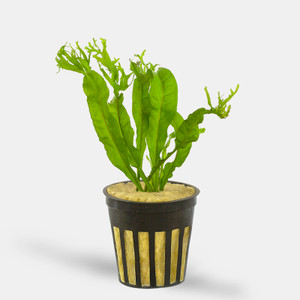
Java Fern (Microsorium Pteropus) | Potted
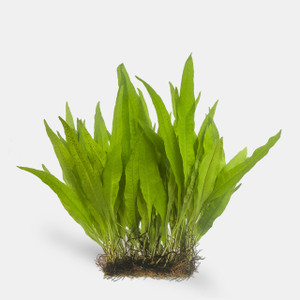
Java Fern is one of the most dependable plants in the aquarium hobby—and one of the easiest ways to make a tank look more natural without adding a lot of maintenance. Native to Southeast Asia, it produces long, elegant dark green leaves that add height, movement, and a mature “grown-in” feel to the aquascape. It’s popular for good reason: Java Fern is versatile, durable, and beginner-friendly, and it even performs well in tanks with more active or rougher fish because its leaves are generally not very palatable to most of them.
Java Fern Overview
In aquascaping, Java Fern works best as a midground-to-background hardscape plant. Rather than being planted in substrate like a stem plant, it looks most natural when attached to rocks, driftwood, or other aquarium decor, where the leaves can rise upward and soften the structure around them. It can grow to around 10 inches tall, which gives you enough height to fill space and create layers without making the tank feel overcrowded.
Aquarists keep coming back to Java Fern because it offers a rare combination of ease, versatility, and long-term beauty:
- Low-maintenance growth that works well in beginner and low-tech aquariums
- A great choice for hardscape mounting on rock, wood, and aquarium decorations
- Tough leaves that hold up better than many softer plants in tanks with active fish
- Excellent for adding height and structure to the midground or background
- A timeless, natural look that pairs well with almost any aquascaping style
Once it’s in place, Java Fern becomes one of those plants that quietly improves the entire layout—adding texture, softening hardscape edges, and making the aquarium feel more established over time.
Caring for Java Fern
Java Fern is famous for being easy to keep and highly adaptable. It does well in a wide range of aquarium conditions and does not need intense lighting to thrive. In fact, moderate light is often ideal, especially if you want to keep maintenance simple and reduce the chance of algae building up on the slow-growing leaves.
The most important care rule is simple: do not bury the rhizome. The rhizome is the thick horizontal part of the plant where the leaves and roots emerge, and if it is buried in substrate, it can rot. Instead, Java Fern should be anchored to hardscape—rocks, driftwood, decorations, or even textured aquarium backgrounds. You can attach it with cotton thread, Scaper’s Glue, or simply wedge it into a crevice until the roots take hold on their own.
Because it is a slow grower, maintenance is minimal. Older leaves that become overly worn, crinkled, or blackened can be trimmed away to keep the plant looking fresh. At the same time, it’s worth knowing that black spots on the underside of the leaves are often spores, not damage—those spots are part of the plant’s natural reproduction and can eventually develop into tiny new plantlets. A light, steady routine with a quality liquid fertilizer can support healthy growth, but Java Fern does not need rich substrate or root tabs the way many rooted plants do.
- Light: Low
- Temperature Range: 64–86°F
- Placement: Midground to Background
- CO₂: Not required
- Difficulty: Easy
- Growth Rate: Slow
With steady conditions and a little patience, Java Fern becomes one of the most reliable plants you can own—easy to maintain, attractive for the long haul, and especially rewarding when attached to hardscape where it can mature naturally over time.
Java Fern is also available bare-root, on a mat, and in other varieties, including, Narrow Leaf, Trident and Windelov Lacy.
Why Choose the Potted Version
Choosing the potted version is a great option if you want a cleaner, more stable start—especially with a plant like Java Fern that is often mounted rather than planted. Because it has been grown and maintained in its pot, it typically arrives with a more established rhizome and root structure, which can make it easier to handle and position as you decide where it will live in the aquascape.
In most cases, the best long-term approach is to remove the plant from the pot and attach it to hardscape, keeping the rhizome exposed. Many aquascapers like the potted version because it gives them a fuller, more settled plant to work with right away, whether they are mounting it to Seiryu Stone, Ohko Dragon Rock, Spider Wood, or Blackwood. It is also a helpful option if you want to temporarily rest the plant among decor while you fine-tune the final layout.
Shopping for Aquarium Plants at Modern Aquarium
At Modern Aquarium, each potted Java Fern is inspected, cleaned, and prepared by hand before shipping so you receive a healthy, ready-to-place plant.
Here are a few reasons aquarists feel confident ordering live plants from us:
- Top Quality Store & real reviews: Modern Aquarium has been trusted by and has thousands of verified reviews from real customers
- Live Arrival Guarantee & fast delivery: All live plants are backed by our Live Arrival Guarantee and ship via FedEx 2-Day delivery
- Trusted sourcing: Our plants come from some of the best nurseries in Florida and are handled carefully from the grower to your aquarium
- What You See Is What You Get: Images on our site are typical representations, but live plants naturally vary in size, fullness, and exact coloration
- Support when you need it: Reach out by chat or phone if you want help with mounting, placement, trimming, or choosing the right hardscape pairing
To complete the look, pair Java Fern with natural hardscape and a few practical extras—use aquascaping tools for easier placement, combine it with stone or driftwood for a more mature layout, and add a light touch of botanicals along the margins if you want a more natural, leaf-litter-inspired feel.
Reviews (3)
-
Nice
Posted by Hannah on 25 Nov 2020It looks like they did a poor job checking for snail eggs and such, two leaves looked like they were covered in dried up snail eggs. Other than that they are doing good. This is my first time with live plants so I wish they clarified in step one that plants should be FULLY SUBMERGED. Some leaves browned and shriveled because of that.
-
Beautiful
Posted by Steven Napier on 16 Sep 2020Also a favorite of mine it looks great with my angelfish and festivums
-
Healthy plants
Posted by Celeste Denniston on 15 Sep 2020Looks great in the aquarium!!!