

Modern Aquarium’s Guide to Setting Up & Using CO2 in a Planted Aquarium
Posted by Artur Wlazlo on 10 Mar 2026
Key Takeaways
- Carbon dioxide is an essential nutrient for aquarium plants and helps them grow faster, healthier, and more vibrant.
- Natural sources of CO2 in an aquarium are often insufficient for heavily planted tanks, making supplementation necessary in some setups.
- Pressurized CO2 systems provide precise control over carbon dioxide levels while maintaining stable pH for fish and plants.
- Adding CO2 fertilization can reduce algae growth, support demanding plant species, and make maintaining a lush planted aquarium easier.
In the last Modern Aquarium blog, we talked about feeding aquarium plants. As promised, we will go into great detail about carbon dioxide fertilization in this one. We will talk about CO2 in planted aquariums and consider its pros and cons. While CO2 fertilization is not required in most aquarium setups, there is no doubt that when provided, it can greatly benefit aquarium plants, their growth, and appearance.
Why Carbon Dioxide Matters in Planted Aquariums
Carbon is by far the most important nutrient for plants. In the aquarium, plants obtain carbon from carbon dioxide or CO2. After absorbing CO2, aquarium plants break it down into carbon and O2. From this process, plants use carbon as “building blocks” to grow and propagate, and while they use some O2, most of it is expelled.
Natural Sources of CO2 in Home Aquariums
There are several sources of CO2 in home aquariums. For example, carbon dioxide is created naturally by plants and fish when they respire. Decaying food, other organic matter, and bacteria that feed on waste all produce varying levels of carbon dioxide. Typically, however, the quantities produced by these natural phenomena are not enough to satisfy aquarium plants’ needs. In addition to being consumed by the plants, CO2 will naturally gas off at the surface of the water.
When CO2 Becomes a Limiting Factor
In many heavily planted aquariums, a lack of CO2 may be the limiting factor in overall plant growth. Plants need CO2 to photosynthesize. Without adequate levels of CO2, they cannot produce enough energy to go and thrive. For these reasons, additional carbon dioxide fertilization may be necessary for a planted aquarium to grow to its full potential.
Introducing CO2 with a Pressurized System
The best and most efficient way to introduce carbon dioxide into an aquarium is by using a pressurized CO2 system. This system introduces CO2 gas directly into the aquarium water. These systems are highly customizable. The Fully Automated CO2 System with pH & CO2 Controller available at Modern Aquarium’s online store allows users to have full control over how much CO2 is introduced into their aquariums. It is our best CO2 System for planted aquariums. By employing the CO2 Regulator, pH & CO2 Controller, the system doses CO2 only when the set parameters are met. This system dispenses CO2 gas when desired, prevents overdosing, and keeps the aquarium’s pH stable and safe for fish. The diagram below shows a setup and setup instructions for Modern Aquarium’s Fully Automated CO2 System.
Understanding the CO2 System Components
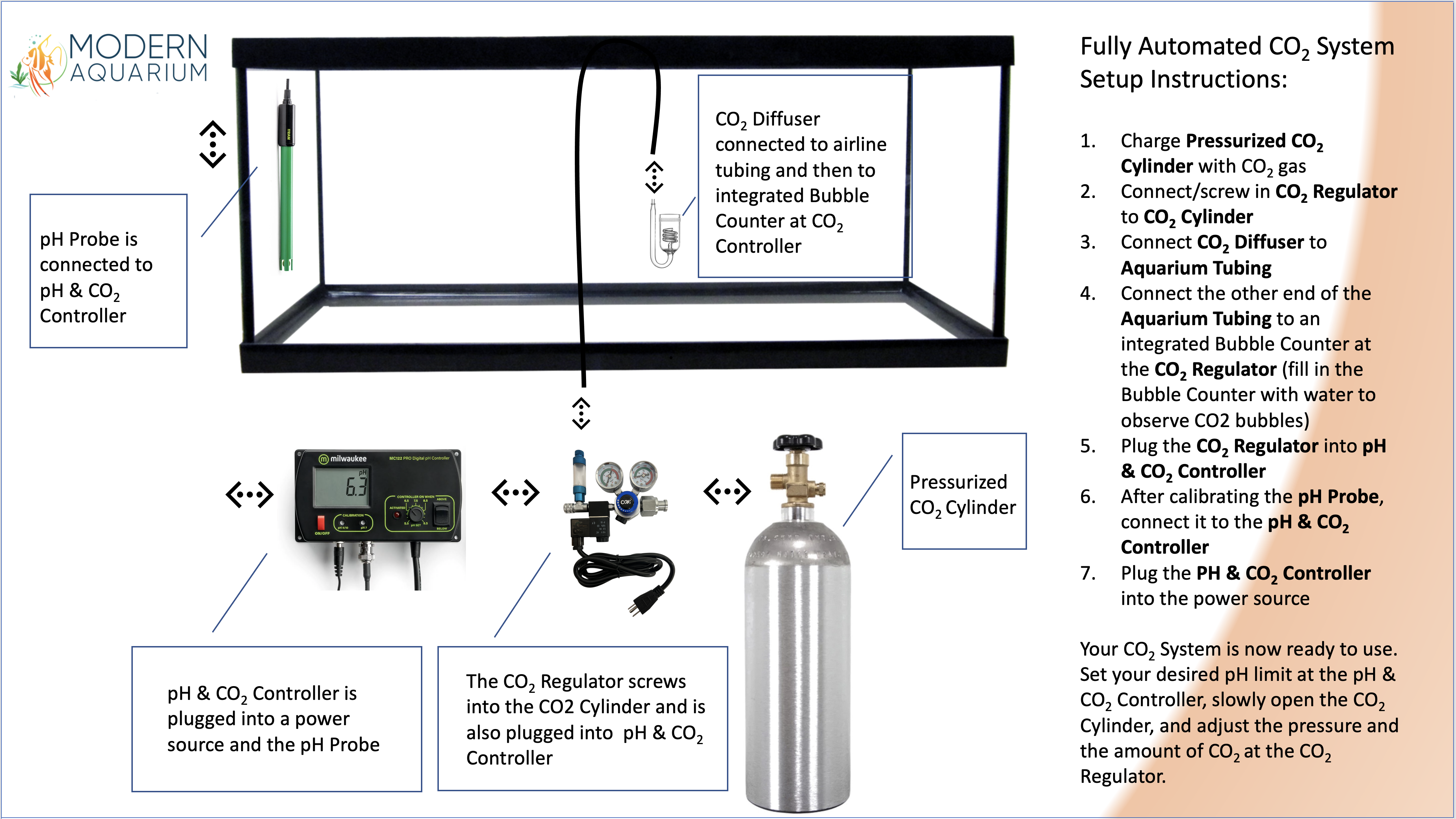
As shown above, the Cylinder contains compressed CO2 gas (available at your local welding store), which is released at a controlled rate through a regulator. The regulator allows for very precise control of how much gas is released, and the integrated bubble counter provides visual confirmation. The CO2 Regulator has two dials: one indicates the release rate and the other the pressure of the gas in the cylinder (an indication of how full the CO2 Cylinder is). The CO2 gas is then sent through an airline tubing to a CO2 Diffuser, where it is kept in contact with the water over an extended period. The Bubble Diffuser’s ceramic plate allows tiny CO2 bubbles to travel upwards through the water. By greatly reducing the size of the bubbles, CO2 gas remains in contact with and “dissolves” faster in the water, increasing the CO2 available for plants to absorb.
How CO2 Affects Aquarium pH
As the CO2 gas is added and dissolves, the pH of the aquarium water will gradually decline. This is normal and expected. However, by setting the low point for pH at the pH and CO2 Controller unit, the system will turn off the supply of the CO2 gas once the set value is reached, preventing a further drop in the pH of the water. As aquarium plants begin absorbing CO2 from the water column, the reverse happens, and the pH of the aquarium will start climbing, eventually reaching the level above the low point set for the pH. At this point, the system will turn on and will begin releasing more gas. The automated system creates a virtuous cycle whereby CO2 is continuously released into the aquarium water, but only when it is depleted and needed by the plants.
Cost Considerations for CO2 Systems
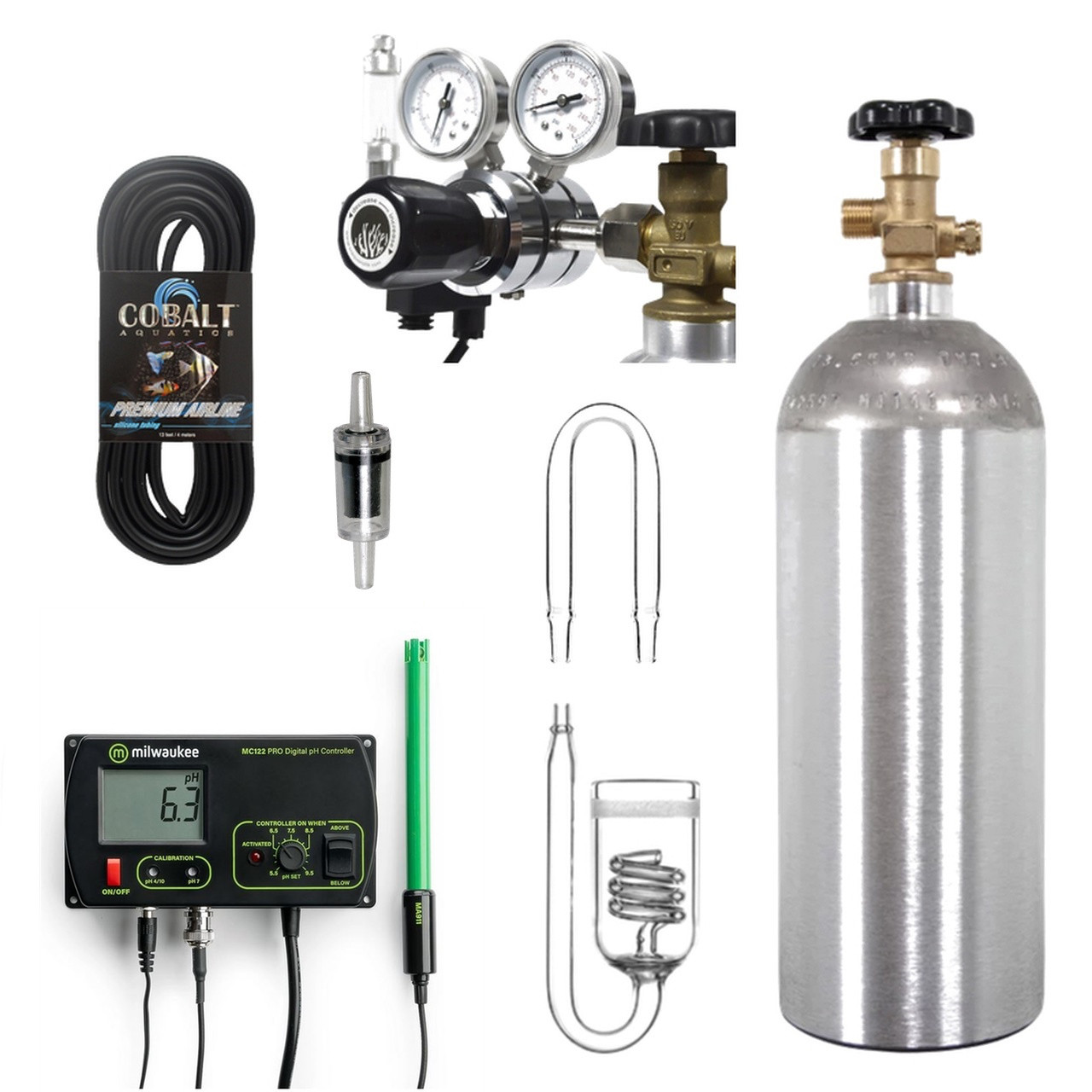
One significant downside is the system’s cost. The individual components required for the CO2 system to function are expensive. Recognizing this limitation, Modern Aquarium designed systems at different price points, allowing you to choose the one that best fits your needs.
Benefits of CO2 Fertilization
Not all planted aquariums need CO2 fertilization. In fact, most probably do not. However, in our experience, the addition of CO2 fertilization invariably makes growing aquarium plants easier. With CO2 fertilization, plants grow faster and bigger. Because aquarium plants are much better at utilizing CO2 than algae, the addition of CO2 also usually means that hobbyists will encounter algae problems in their aquariums less frequently. CO2 system opens up opportunities to keep many different plants, even those highly demanding.
Getting Started with Modern Aquarium CO2 Systems
If you are considering CO2 for your planted aquarium, check our CO2 systems in our online store, and do not hesitate to reach out if you have any questions.